

Have you ever walked away from a stressful conversation and felt as though the tension followed you home? Maybe your mood suddenly became heavy, your thoughts felt crowded, or your usually comforting space seemed strangely unsettled.
When that happens, a simple salt cleansing ritual can help you pause, reset, and reconnect with yourself. Salt has been associated with purification, protection, and spiritual renewal in many cultural and folk traditions, making it one of the easiest tools to add to a personal energy-cleansing practice.
You do not need expensive supplies, advanced experience, or an elaborate altar. With a small amount of salt, a clear intention, and a few quiet minutes, you can create a meaningful ritual that supports calm, clarity, and emotional release.
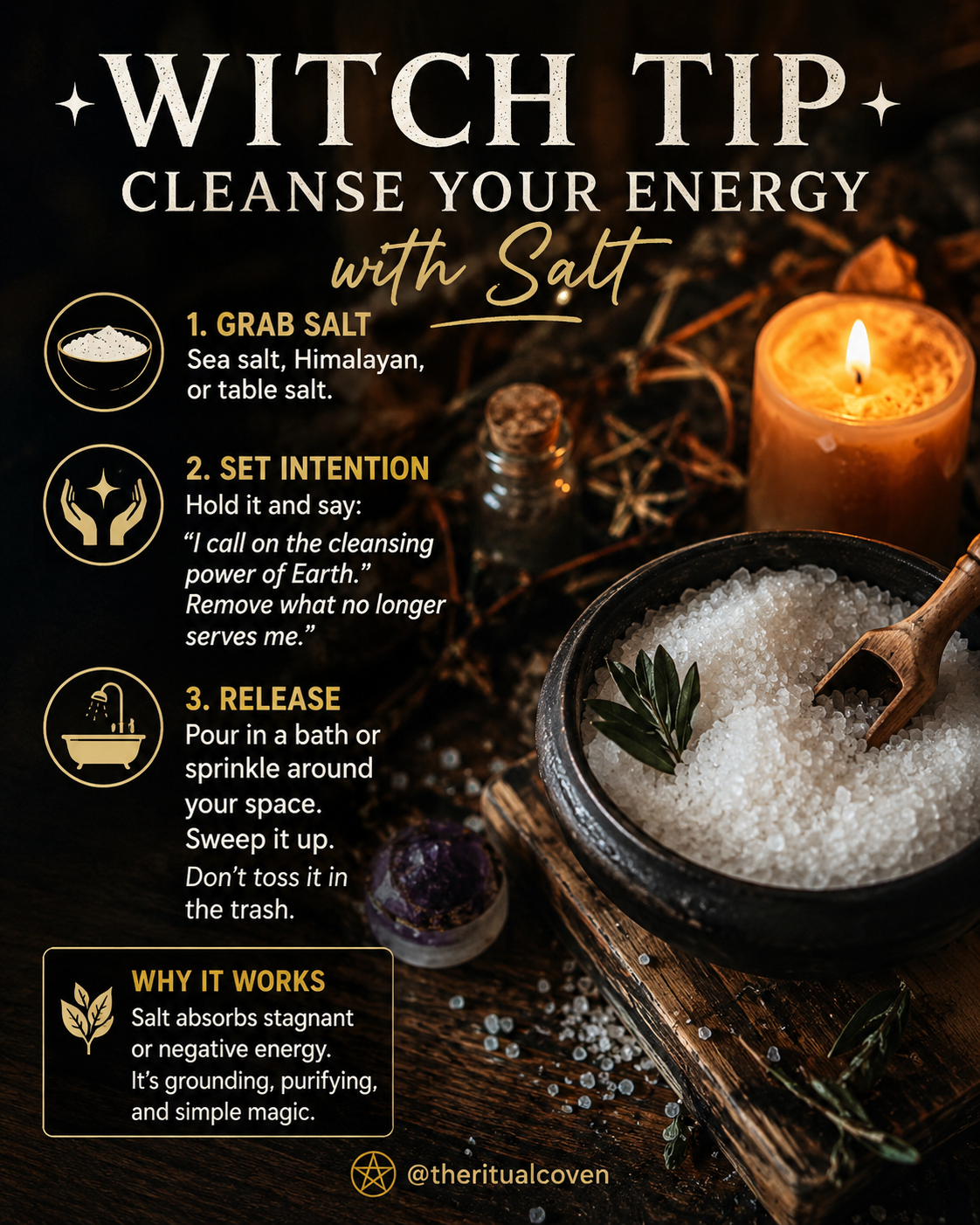
Why Is Salt Used for Spiritual Energy Cleansing?
Salt has practical cleansing and preserving properties, so it naturally became a symbol of purity and protection. Across different spiritual traditions, it has been placed near doorways, added to baths, carried in small containers, and used to mark protective boundaries.
From a ritual perspective, salt gives your intention a physical form. When you hold it, sprinkle it, or dissolve it in water, you are creating a deliberate moment in which you can acknowledge what feels heavy and choose to let it go.
This does not mean salt is a guaranteed cure for every problem. Instead, a salt energy cleanse can function as a grounding spiritual practice that helps you slow down, focus your mind, and make a conscious transition from stress toward peace.
What Type of Salt Is Best for Cleansing Negative Energy?
You can cleanse your energy with almost any plain salt already in your kitchen. Your attention and intention matter more than the price, color, or size of the crystals.
- Sea salt: A popular choice for baths, floor washes, and bowls because of its connection to the ocean.
- Coarse salt: Easy to place in dishes or use along indoor thresholds.
- Table salt: Affordable, accessible, and completely suitable for a quick cleansing ritual.
- Pink salt: Often selected for rituals centered on gentleness, self-love, or emotional comfort.
- Epsom salt: Commonly used in baths, although it is technically magnesium sulfate rather than culinary salt.
Avoid assuming that rare or costly salt is automatically more powerful. Choose an option that is safe for your intended use and feels appropriate to you.
How to Cleanse Your Energy With Salt in Five Easy Steps
This beginner-friendly salt cleansing ritual can be completed in a few minutes. Use it after a draining day, before meditation, following an argument, or whenever you want to begin again with a clearer mindset.
1. Prepare a Quiet and Comfortable Space
Choose a place where you can be undisturbed for several minutes. Silence notifications, soften the lighting, and take three slow breaths.
You may open a window if the weather and your surroundings allow it. Symbolically, the open window offers released tension a place to go while inviting fresh air into the room.
2. Place a Small Amount of Salt in Your Hands
Pour a teaspoon of salt into one palm or place it in a small bowl in front of you. Notice its color, texture, and weight.
Let this sensory focus bring you into the present. You do not need to force yourself to feel anything mystical; simply becoming more aware of the moment is enough.
3. Name What You Are Ready to Release
Think about the feeling you no longer wish to carry. It could be tension, self-doubt, resentment, exhaustion, or the emotional residue of a difficult interaction.
Keep your intention direct and compassionate. You might quietly say:
“I release what does not support my peace. I return to my own clear, grounded energy.”
You can change these words so they sound natural to you. Honest language usually feels more meaningful than a complicated script.
4. Move the Salt Around Your Energy Field
Keep the salt inside its bowl and slowly move the bowl around the front and sides of your body. Start near your head and work downward toward your feet without touching your skin.
As you move, imagine the salt representing the absorption of stress and unwanted emotional heaviness. Visualize your breathing becoming easier and your attention returning to your body.
If moving the bowl is uncomfortable, leave it on a table and hold your hands a few inches above it. Picture yourself releasing tension with every exhale.
5. Dispose of the Salt and Close the Ritual
When you feel complete, thank yourself for taking time to reset. Dispose of the small amount of salt in your household trash.
Avoid throwing concentrated salt into gardens, soil, waterways, or areas where animals may encounter it. Salt can harm plants and disrupt natural environments.
Wash the bowl and your hands, drink some water, and take a final deep breath. Your ritual is now complete.
How to Take a Salt Bath for Spiritual Cleansing
A salt bath offers a soothing way to combine spiritual intention with ordinary self-care. It may be especially welcome after travel, social events, emotionally demanding work, or a period of overstimulation.
- Clean your bathtub before beginning so the space feels fresh.
- Fill the tub with comfortably warm—not excessively hot—water.
- Add a modest amount of bath-safe salt and dissolve it fully.
- Enter carefully and relax for approximately 10 to 20 minutes.
- As you soak, breathe slowly and imagine stress loosening from your body.
- Drain the water while visualizing emotional heaviness leaving with it.
- Rinse with fresh water if your skin feels dry or sensitive.
Never apply coarse salt by scrubbing it aggressively into your skin. Skip salt baths if you have open wounds, significant skin irritation, or a health condition that makes bathing unsafe.
If you are pregnant, managing a medical condition, or unsure whether a salt bath is appropriate, consult a qualified healthcare professional. Spiritual practices should complement responsible care, not replace medical or mental health support.
How to Cleanse Your Home With Salt
Your surroundings can affect how settled and supported you feel. Cleaning, decluttering, opening curtains, and introducing fresh air are practical first steps; a symbolic salt ritual can then help mark the emotional reset.
Use a Bowl of Salt to Refresh a Room
Pour a small amount of salt into a clean bowl and place it on a stable, elevated surface. Keep it away from children, pets, moisture, electronics, and food preparation areas.
Set an intention such as, “May this room feel peaceful, clear, and welcoming.” Leave the bowl in place for several hours or overnight, then discard the salt in the trash.
Do not eat or cook with salt that has been used in a ritual. Label the bowl or keep it separate from your kitchen supplies to prevent accidental use.
Create a Saltwater Floor Wash
If your flooring manufacturer permits it, dissolve a very small amount of salt in warm cleaning water. Mop from the farthest part of the room toward the doorway while imagining stagnant feelings moving out.
Salt can damage natural stone, hardwood, metal, and some sealed surfaces. Check care instructions and test a hidden area first. If salt is unsuitable, complete your normal cleaning routine and keep the salt nearby in a bowl as a symbolic element instead.
For a deeper intentional reset of your living environment, explore The Ritual Coven’s Home Blessing and Land Clearing ritual.
Place Salt Near an Entryway Safely
Rather than scattering loose salt where someone could slip or an animal could lick it, place it in a secure, covered container near the inside of your entrance.
As you set it down, affirm that your home is a place of safety, respect, and restoration. Replace the salt regularly and dispose of the old portion responsibly.
Easy Salt Cleansing Ritual Without a Bathtub
You do not need a bathtub to enjoy a water-based cleansing ritual. A salt hand soak or foot soak is a practical alternative.
- Fill a clean basin with comfortably warm water.
- Add a small amount of salt and stir until dissolved.
- Soak your hands or feet for 5 to 10 minutes.
- Breathe deeply and name three feelings you are ready to release.
- Rinse, dry thoroughly, and moisturize if needed.
Another option is a saltwater shower ritual. Dissolve a pinch of salt in a cup of warm water, then pour it from the shoulders down before rinsing. Keep it away from your eyes, face, and irritated skin, and never use it on a slippery shower floor without care.
How Often Should You Cleanse Your Energy With Salt?
There is no universal schedule. Some people use salt once a week, while others reserve it for moments that feel emotionally significant.
You may want to perform a gentle cleanse:
- After spending time in a tense or crowded environment
- Following an argument or emotionally intense conversation
- Before meditation, journaling, or divination
- After moving into a new home or rearranging a room
- When ending one chapter and preparing for another
- Whenever a deliberate pause would help you feel grounded
More is not always better. A short, focused practice once in a while may feel more supportive than repeating a ritual anxiously.
If you find yourself feeling compelled to cleanse constantly or becoming distressed when you cannot, pause and seek appropriate emotional support. A healthy spiritual practice should help you feel empowered rather than afraid.
What to Say During a Salt Energy Cleanse
Your words can be simple. The best cleansing affirmation is one that reflects your true intention and does not intensify fear.
Try one of these phrases:
- “I release the stress of this day and welcome peace.”
- “My energy is my own, and I return to my center.”
- “This home is filled with clarity, warmth, and respect.”
- “I let go of what I cannot control.”
- “I am grounded, present, and open to a fresh beginning.”
- “Only what supports my well-being is welcome here.”
You can also write your own affirmation in a journal before beginning. This makes the purpose of your ritual clearer and gives you something to reflect on afterward.
Common Salt Cleansing Mistakes to Avoid
A salt cleanse is simple, but thoughtful use makes it safer and more meaningful. Avoid these common mistakes:
- Using too much salt: A pinch or small bowl is usually sufficient.
- Leaving salt where pets can reach it: Excess salt can be dangerous if swallowed.
- Scattering it outdoors: Concentrated salt can harm soil, plants, and wildlife.
- Applying it to broken skin: Salt can sting and worsen irritation.
- Using ritual salt for food: Discard it rather than returning it to the kitchen.
- Expecting instant control over external events: Focus on your own mindset, boundaries, and next steps.
- Skipping practical action: Pair ritual with cleaning, communication, rest, or professional support as appropriate.
How to Strengthen Your Energy Cleansing Practice
Salt works beautifully as part of a broader routine focused on personal boundaries and intentional living. After cleansing, consider adding an action that reflects the energy you want to cultivate.
You might journal, change your bedding, tidy one surface, turn off your phone, or sit quietly with a cup of tea. These small actions help carry your ritual intention into everyday life.
If you want additional spiritual support, consider pairing your home practice with a professionally prepared ritual from The Ritual Coven.
The Triple Cast Aura Cleansing Ritual is a natural next step for those seeking a more focused aura-cleansing experience. For distance-based support, you can also explore the Long Distance Aura Cleansing.
If your intention centers on releasing old patterns, the Uncrossing and Hex Breaker ritual may complement your personal reset. Those focusing on emotional separation can explore the Cord Cutting Ritual or Soul Tie Release.
For ongoing spiritual boundaries, visit the Protection Rituals offering. If rest has been difficult, the Restful Sleep and Nightmare Guard can be incorporated into a calming evening routine.
Frequently Asked Questions About Cleansing Energy With Salt
Can I use regular table salt for an energy cleanse?
Yes. Regular table salt is suitable for a symbolic energy-cleansing practice. You do not need specialty salt for your ritual to feel intentional or meaningful.
Can I reuse salt after cleansing?
It is best to discard salt used in a cleansing ritual. Do not cook with it, eat it, or return it to its original container.
Where should I dispose of cleansing salt?
Place it in your household trash. Avoid disposing of concentrated salt in gardens, potted plants, natural water sources, or outdoor spaces.
Can I cleanse jewelry or crystals with salt?
Use caution. Salt and saltwater can corrode metals and damage porous, soft, or water-sensitive stones. Research the specific material first; when uncertain, place the object near a closed bowl of salt rather than directly in it.
What if I do not feel different after the ritual?
That is completely normal. Spiritual practices do not always produce a dramatic sensation. The value may be found in the pause, the focused breathing, or the conscious decision to move forward differently.
Does salt cleansing remove negative energy permanently?
A salt cleanse is best understood as an intentional practice rather than a permanent guarantee. Ongoing boundaries, rest, supportive relationships, a healthy environment, and practical problem-solving remain important.
Begin Your Personal Energy Reset Today
You do not have to wait for the perfect moon phase, an elaborate altar, or a completely quiet life. A little salt and a clear intention are enough to create a sacred pause in the middle of an ordinary day.
Start gently. Name what you are releasing, breathe with purpose, and follow your ritual with one practical act that supports the peaceful energy you want to keep.
If you feel ready to deepen your practice, explore The Ritual Coven’s Cleansing Ritual for focused spiritual support. You can also browse the full collection at The Ritual Coven and choose an offering aligned with your current intention.
Ready for a Deeper Energetic Refresh?
Support your at-home salt practice with a dedicated aura-cleansing ritual created around renewal, clarity, and intentional release.
Spiritual rituals are offered for personal reflection and entertainment. They do not guarantee specific outcomes and are not substitutes for medical, mental health, legal, or financial care.